Advertisement feature  

The Imperial Hotel, Tokyo: An icon for
the ages

Relive the glamour and design of the
Imperial Hotel’s Frank Lloyd Wright
Building with celebrations for its centenary.

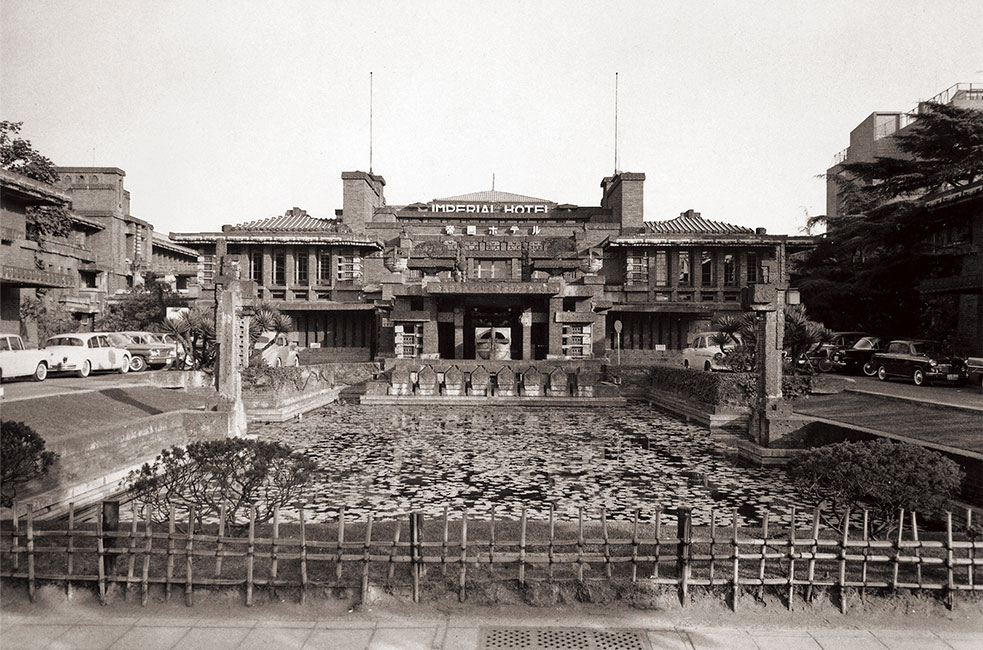
When the Imperial Hotel opened its doors in 1890, it was Tokyo’s first hotel designed specifically for the global elite. However, it was the hotel’s second incarnation that would make it, truly, a destination in its own right. Designed by the great American architect Frank Lloyd Wright and completed in 1923, the dramatic structure was nicknamed, at the time, the “Jewel of the Orient”. While the hotel is currently in its third incarnation, traces of its former iterations can be found around the property.

In 2023, as the Imperial celebrated the 100th anniversary of its Wright Building, there is more to appreciate
than ever.

A storied building for a new era

The first Imperial Hotel belonged to the era of horses and carriages, and Japan’s first, tentative tango with Western culture; the second versions related to the nascent automobile and to a bolder cosmopolitanism.

  • The new Imperial Hotel was constructed of poured concrete and reinforced steel—cutting edge technologies for the time—as well as terracotta brickwork and Oya stone, a kind of volcanic tuff found only in Oya, a town in Japan’s Tochigi prefecture not far from the shrines and temples of Nikko. The stone, in shifting shades of grey and a subtle, mossy green, added warmth and depth; it was also easy to carve, and local artisans were tasked with adding geometric patterns and reliefs to the porous stone.

The hotel’s design, particularly the way it extended from the central entrance to the left and the right, may also have been inspired by the famous Phoenix Hall, at Byodoin Temple in Uji, Kyoto—a model of which Wright had seen at the 1893 Chicago World’s Fair.

This second incarnation of the Imperial Hotel represented the pinnacle of Wright’s engagement with Japan. The architect, considered one of the most influential of the 20th century, was already a well-established collector of Japanese woodblock prints, and it was through this connection that he came to receive the commission for the new hotel design in 1916. During the six years that Wright would spend in Japan overseeing the design and construction of the hotel, he designed 14 structures - six of which were actually built—and inspired a whole generation of Japanese architects. Wright, in turn, is often cited as having named but three influences on his work, with one of them being the Japanese woodblock print.


  • One of Wright's most famous architectural techniques is "compression and release," which was also used in the Wright Building. The entrance was low, but the further back you go, the wider and higher the space became, which was said to have the effect of releasing people's feelings and giving them a sense of relief. Wright also valued harmony with nature: materials derived from nature—earth and stone—were utilised in every detail of the decoration. The guest rooms located on the first to third floors of the building were also designed to be integrated with Hibiya Park and the Imperial Palace.

Wright envisioned the hotel as a place where people gather, meet, and interact. The public space—the lobby, banquet hall, and restaurant—took up almost as much space as all of the guest rooms combined. The width of the corridors and the position of the staircases were also carefully planned and designed so that guests could greet and interact with each other. The hotel was equipped with a theatre, which was rare at that time, and in the summer, movies were screened in the rooftop garden.

The Imperial Hotel today

Today, the Imperial Hotel is on its third incarnation. In the 1960s, Japan was a country on the rise, and so, too, were its buildings. The Wright Building, by then dated and in need of repairs and upgrades, was instead dismantled (though not before Marilyn Monroe and Joe DiMaggio stayed there on their honeymoon in 1954; other noteworthy guests include Charlie Chaplin). A new skyscraper, stately but sober in comparison, went up in its place in 1970. It could accommodate three times the number of guests, in larger rooms and with the latest modern conveniences; those on higher floors also overlooked the palace grounds—something no other building offered at the time.

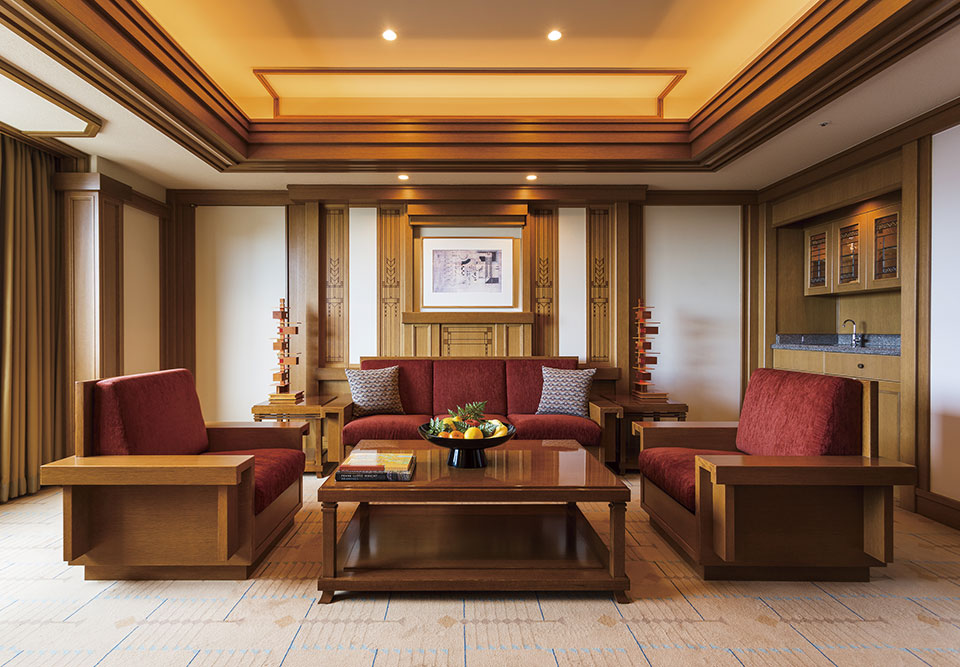
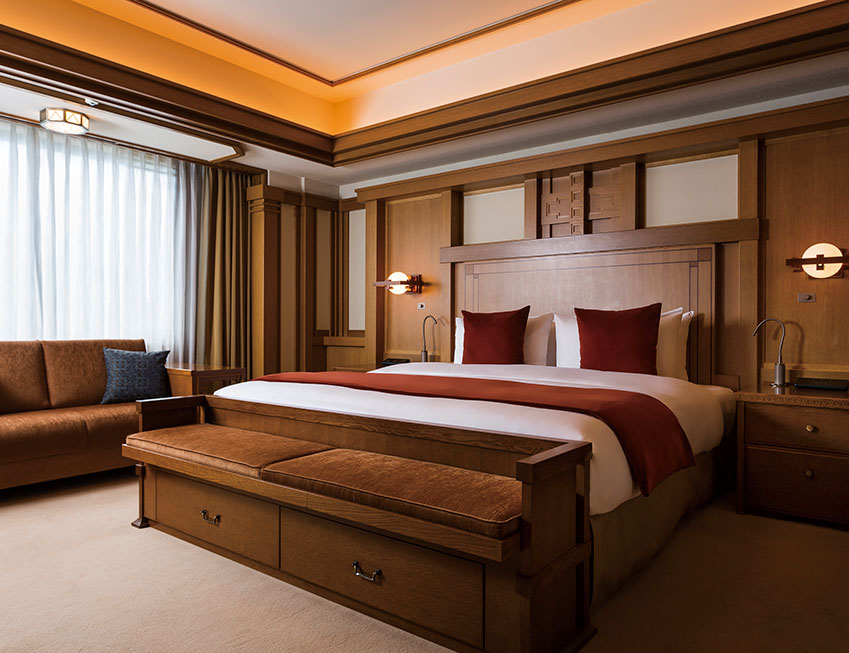
  • The Frank Lloyd Wright® Suite bears most of the signatures of Wright’s iconic design, from the ornamental Oya stone in the foyer to the carpets recreated from the architect’s original sketches. It’s the only suite of its kind in the world, created in cooperation with The Frank Lloyd Wright Foundation.

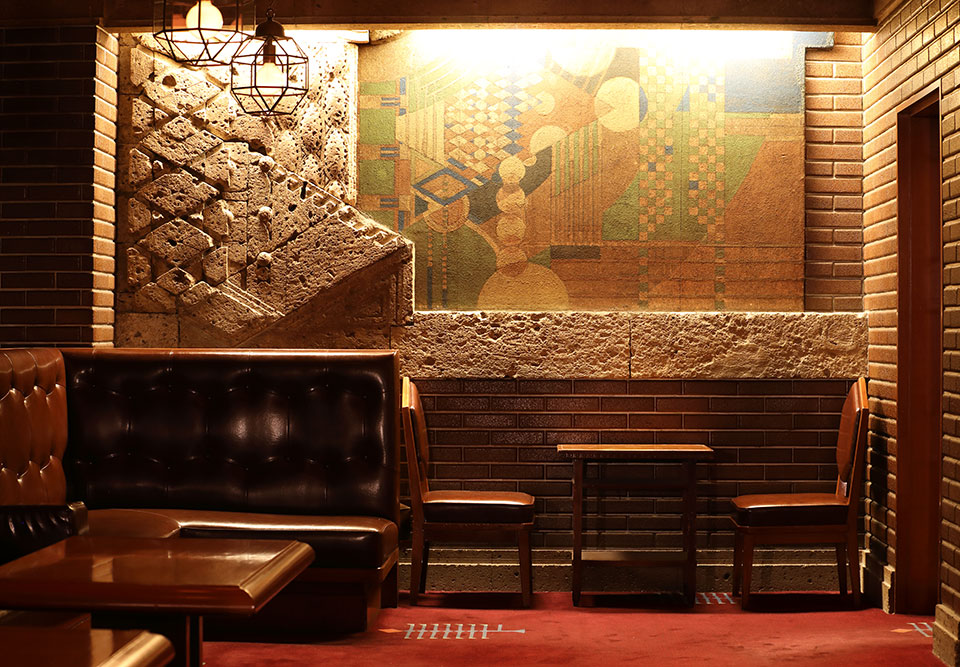
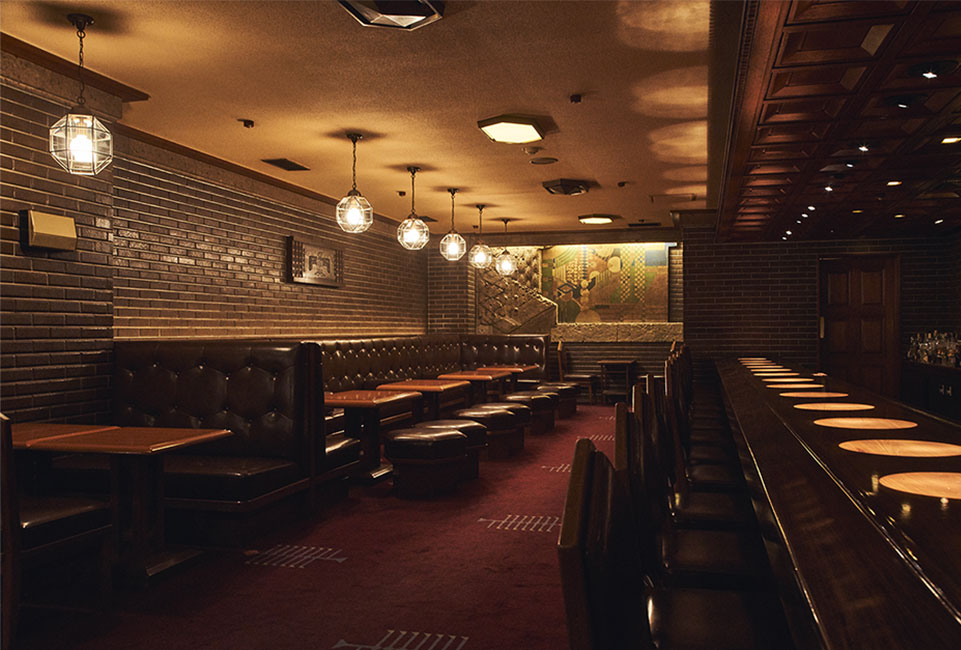
Wright’s original design, however, remains preserved inside the hotel’s main bar, the Old Imperial Bar. The walls are partially made of terracotta and Oya stone—from the time of the Wright Building—and are decorated with mosaic panels. There is also the moody intimacy and chiaroscuro lighting, as well as a deliciously vintage cocktail menu. Still included on it is the Mount Fuji, a gin concoction that made its debut in 1924 when it was served at an event welcoming visitors to Tokyo who were travelling around the world on a cruise ship. Evoking the iconic snow-capped Mount Fuji with the sun rising above it—represented by a peak of frothy egg white and a maraschino cherry respectively—the Mount Fuji was the Imperial's first ever original cocktail. Flavoured with lemon, egg white and other ingredients, the taste features a mellow, gentle sweetness, evidence of the care taken in blending the various components.

Then there is the Frank Lloyd Wright® Suite, which opened in 2005 and also incorporates the design of the original Wright Building, as well as of Wright’s own residence and his other properties. It bears most of the signatures of Wright’s iconic design, from the ornamental Oya stone in the foyer to the carpets recreated from the architect’s original sketches. There is also an abundance of natural light, which flows in from the suite’s windows, and an exquisite attention to detail. It’s the only suite of its kind in the world, created in cooperation with The Frank Lloyd Wright Foundation.

Beyond design: Fine dining, tea, and hospitality

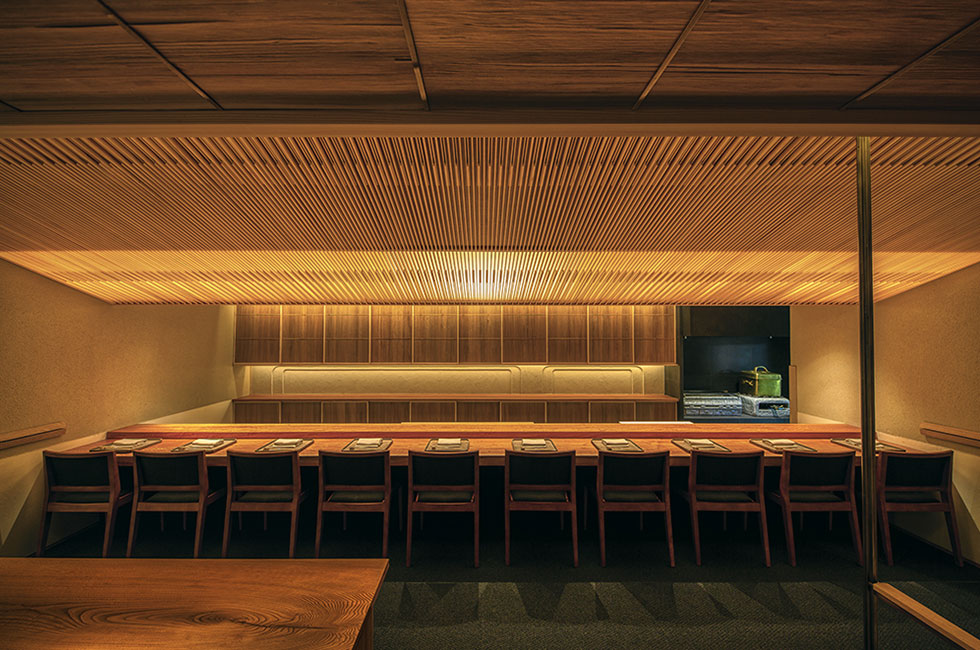
A hotel is, of course, far more than its structure—no matter how architecturally significant. When the very first Imperial Hotel opened, one of its defining features was that it served French cuisine for travellers unaccustomed to Japanese cuisine. Now, its most talked about restaurant is Japanese: Torakuro opened in the fall of 2021 and has already earned its first Michelin star.

  • Times change, and tradition is more important than ever at the Imperial Hotel, even as it remains a landmark symbol of Tokyo at its cosmopolitan finest.

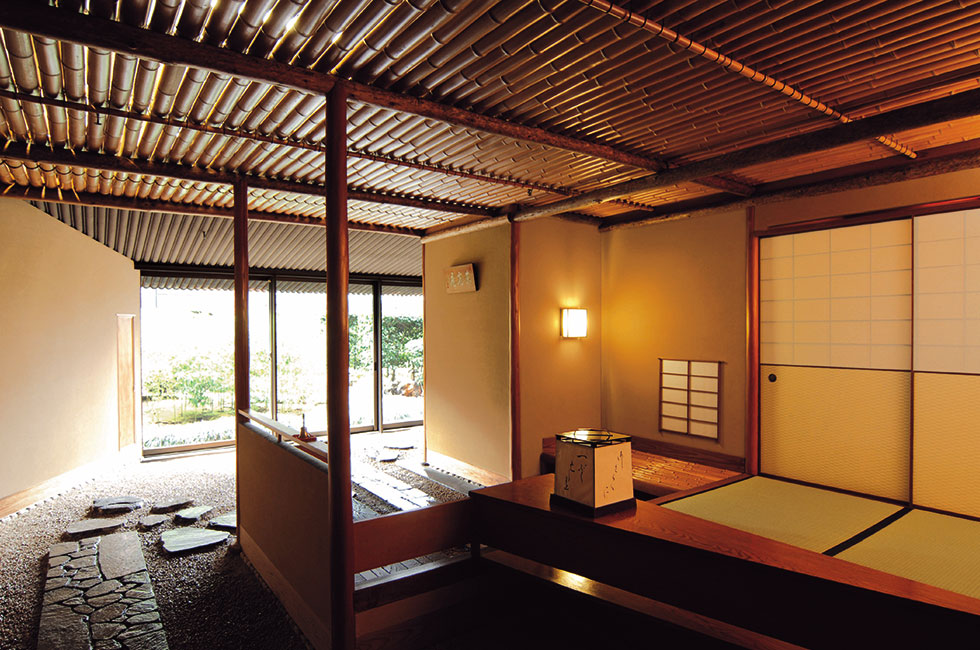
The Imperial Hotel also houses a tea room, the Toko-an, designed by renowned Japanese architect Togo Murano. It is in the sukiya style, which incorporates all the elements of a classic tea room, including a garden, and allows visitors to experience matcha green tea in the spirit of a tea ceremony.

In short, times change, and tradition is more important than ever at the Imperial Hotel, even as it remains a landmark symbol of Tokyo at its cosmopolitan finest.

Produced by E² Studio for

Other Stories

Written by

BACK TO TOP